The case of Maulana Abubakar Muavia confirms that new laws and Supreme Court directions did not solve what remains a tragic problem in Pakistan.
by Massimo Introvigne

It all happened in one month. At the end of March, one Mudassar Nazeer reported to the police a prominent Pakistani Muslim cleric, Maulana Abubakar Muavia, after having caught him red-handed in the process of raping his 12-year-old son in Tandlianwala, Faisalabad. The cleric was arrested.
However, another well-known cleric called Maulana Ibtisam Zaheer stepped in and offered to “mediate” between the boy’s father and Muavia. As a result, Nazeer withdrew the complaint claimed he understood he should forgive Muavia in the name of God and may have “misunderstood” the incident. Based on this, on March 30 the Tandlianwala Judicial Magistrate Nauman Tahir closed the case and set Muavia free.
Some local police officers, however, took exception to the court’s verdict, by noting that in fact Ibtisam had convened a Jirga or Panchayat, an Islamic “mediation court” that had declared Muavia innocent and asked the boy’s father to withdraw the complaint. According to a 2019 Pakistani Supreme Court decision, the Jirga and Panchayat are “kangaroo courts” whose verdicts should be ignored by secular authorities.
While the discussion reached the national Parliament, and Muavia was congratulated by his supporters on social media for the acquittal, on April 8 police, who had kept the cleric under surveillance, caught him in the act of abusing a different boy and arrested him again.

Whatever the outcome of the Muavia case, the controversy sheds light on a hidden phenomenon, the frequent sexual abuse of both boys and girls in Islamic madrassas and other learning institutions in Pakistan. Some may object that child abuse also happens in Catholic and other institutions, which is certainly true, but this is not a good reason for Pakistani courts to protect madrassa abusers and rely on “mediations” or “arbitrations” of Islamic institutions that mostly rule in favor of the clerics.
According to Sahil, an NGO advocating for the rights of abused children, in Pakistan, as everywhere else, the highest number of child sexual abuses occur in the family. However, in the first six months of 2023 fifteen religious teachers were also accused of child sexual abuse. The number of girls abused in Islamic educational institutions is slightly higher than that of boys.
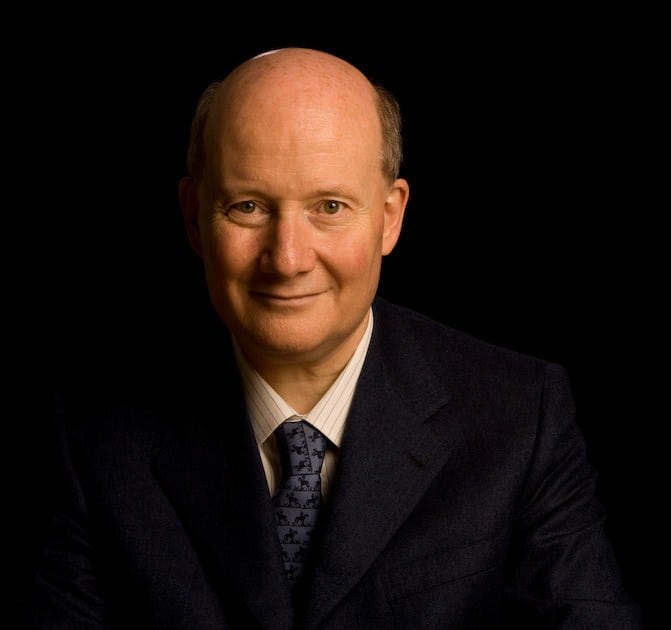
Massimo Introvigne (born June 14, 1955 in Rome) is an Italian sociologist of religions. He is the founder and managing director of the Center for Studies on New Religions (CESNUR), an international network of scholars who study new religious movements. Introvigne is the author of some 70 books and more than 100 articles in the field of sociology of religion. He was the main author of the Enciclopedia delle religioni in Italia (Encyclopedia of Religions in Italy). He is a member of the editorial board for the Interdisciplinary Journal of Research on Religion and of the executive board of University of Pennsylvania Press’ Nova Religio. From January 5 to December 31, 2011, he has served as the “Representative on combating racism, xenophobia and discrimination, with a special focus on discrimination against Christians and members of other religions” of the Organization for Security and Co-operation in Europe (OSCE). From 2012 to 2015 he served as chairperson of the Observatory of Religious Liberty, instituted by the Italian Ministry of Foreign Affairs in order to monitor problems of religious liberty on a worldwide scale.