On April 11, 2024, a forceful statement urged Pakistani authorities to respect their international obligations.
by Massimo Introvigne

On April 11, 2024, the United Nations expressed for the second time in an official statement their concern for the abduction, forced conversion to Islam, and forced marriage of religious minority girls in Pakistan. The first UN document on the issue had been published on January 16, 2023.
The new statement is signed by Tomoya Obokata, Special Rapporteur on contemporary forms of slavery, including its causes and consequences; Siobhán Mullally, Special Rapporteur on trafficking in persons, especially women and children; Nicolas Levrat, Special Rapporteur on minority issues; Nazila Ghanea, Special Rapporteur on freedom of religion or belief; as well as by members of the UN Working group on discrimination against women and girls Dorothy Estrada Tanck (Chair), Claudia Flores, Ivana Krstić, Haina Lu, and Laura Nyirinkindi.
The situation has not improved with respect to 2023, the text says. “Christian and Hindu girls remain particularly vulnerable to forced religious conversion, abduction, trafficking, child, early and forced marriage, domestic servitude and sexual violence. The exposure of young women and girls belonging to religious minority communities to such heinous human rights violations and the impunity of such crimes can no longer be tolerated or justified.”
The document notes that “forced marriages and religious conversions of girls from religious minorities which have been coerced are validated by the courts, often invoking religious law to justify keeping victims with their abductors rather than allowing them to return them to their parents. Perpetrators often escape accountability, with police dismissing crimes under the guise of ‘love marriages.’”
“Bitter Winter” has covered several such cases, where the abducted girls were minors, yet Pakistani courts claimed that their birth certificates were “incorrect” and they had in fact a “biological age” older than 18. The United Nations document mentions the case of the Christian “Mishal Rasheed – a young girl who was abducted at gunpoint from her home while preparing for school in 2022. Rasheed was sexually assaulted, forcibly converted to Islam and forced to marry her abductor.” Another case, the text adds, happened on 13 March 2024, when “a 13-year-old Christian girl was allegedly abducted, forcibly converted to Islam and married to her abductor after her age was recorded as 18 on the marriage certificate.”
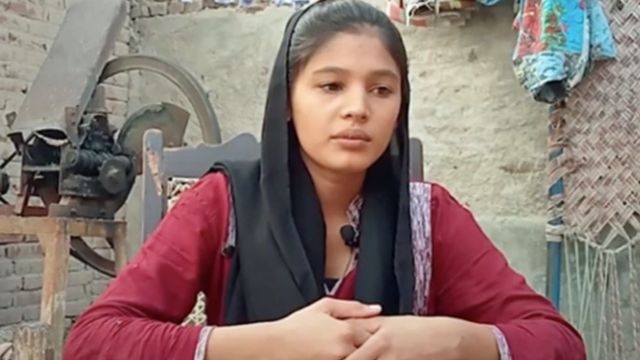
Pakistan, the document concludes, “needs to uphold its obligations in relation to article 18 of the ICCPR and prohibit forced religious conversions.The Pakistani authorities must enact and rigorously enforce laws to ensure that marriages are contracted only with the free and full consent of the intended spouses, and that the minimum age for marriage is raised to 18, including for girls. All women and girls must be treated without discrimination, including those belonging to the Christian and Hindu communities, or indeed other religions and beliefs.”
The United Nations urges Pakistan “to bring perpetrators to justice, enforce existing legal protections against child, early and forced marriage, abduction and trafficking of minority girls, and uphold the country’s international human rights obligations.”
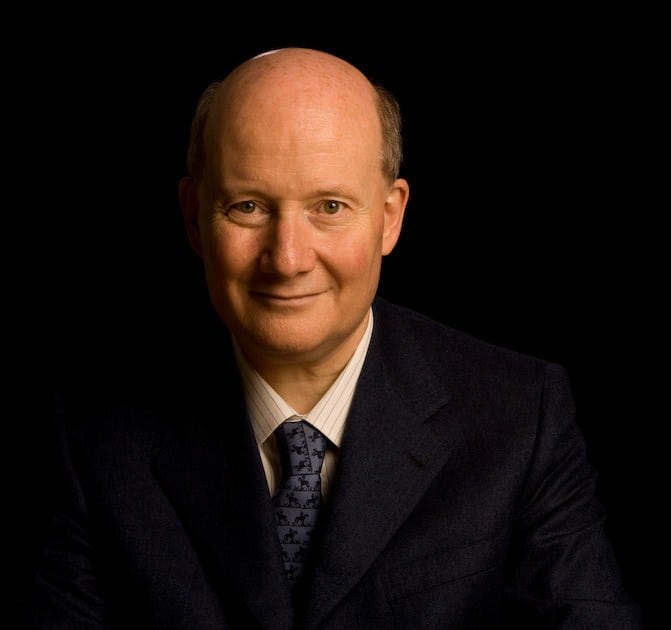
Massimo Introvigne (born June 14, 1955 in Rome) is an Italian sociologist of religions. He is the founder and managing director of the Center for Studies on New Religions (CESNUR), an international network of scholars who study new religious movements. Introvigne is the author of some 70 books and more than 100 articles in the field of sociology of religion. He was the main author of the Enciclopedia delle religioni in Italia (Encyclopedia of Religions in Italy). He is a member of the editorial board for the Interdisciplinary Journal of Research on Religion and of the executive board of University of Pennsylvania Press’ Nova Religio. From January 5 to December 31, 2011, he has served as the “Representative on combating racism, xenophobia and discrimination, with a special focus on discrimination against Christians and members of other religions” of the Organization for Security and Co-operation in Europe (OSCE). From 2012 to 2015 he served as chairperson of the Observatory of Religious Liberty, instituted by the Italian Ministry of Foreign Affairs in order to monitor problems of religious liberty on a worldwide scale.