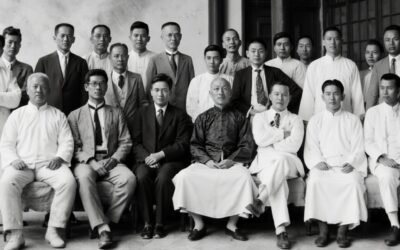
The Tai Ji Men case is one of freedom of religion or belief. We have specific and urgent requests for Taiwan’s government.
by Sara Susana Pozos Bravo*
*A paper presented at the webinar “In Solidarity with Tai Ji Men: Defending Victims of Discrimination and Persecution,” co-organized by CESNUR and Human Rights Without Frontiers on March 24, 2024, International Day for the Right to the Truth Concerning Gross Human Rights Violations and for the Dignity of Victims.

I have studied the Tai Ji Men case and the persecution they have suffered. The case, much better known in Europe and Asia, is practically unknown in Latin America. On this side of the world, we have many more problems than in other latitudes, but the cases of persecution and human rights violations seem to be, unfortunately, universal.
The history of the persecution and repression of religions that were labeled as fraudulent organizations in Taiwan for political reasons dates back to 1996. What we know is that the persecution against Tai Ji Men began in that year and has been going on for twenty-eight years. In 2007, Tai Ji Men was exonerated by the Supreme Court of all criminal charges, both of fraud and of tax evasion. However, it continued to be harassed through ill-founded tax bills and it has not received justice to this day for the grave human rights violation it has suffered.
That is why today, within the framework of the International Day for the Right to the Truth Concerning Gross Human Rights Violations and for the Dignity of Victims, we once again appeal to the Taiwanese authorities, because the right to truth implies acknowledging the serious human rights violations against Tai Ji Men and redressing the harm.
The truth should not be understood only as a moral or philosophical concept. It is the inalienable right of every victim who has suffered gross violations of his or her rights to know and hear the truth about the circumstances that led to these violations, and the evolution and results of the corresponding investigations.
In the case we examine today, Tai Ji Men, our demands are specific.
1. We demand that the State applies transitional justice through the mechanisms it deems necessary to access the truth in a case that has been going on for twenty-eight years. The scope of transitional justice is extremely important because it implies that these mechanisms also guarantee the reparation of damages and something crucial, that after the conflict the abuses are not repeated. When this is achieved, truth and memory merge in the image of justice as the ultimate ideal of human rights.
2. We demand that the State instructs the Ministry of Finance and the National Taxation Bureau to standardize the criteria on the nature of the monetary contributions to masters of qigong and martial arts, based on the evidence that they are gifts.
3. We demand that the State revokes the illegal tax bill that resulted in the confiscation of the sacred land of Tai Ji Men, so that the money Tai Ji Men dizi donated to buy this land may achieve its intended purpose.
4. We demand that the State indemnifies Tai Ji Men for the damages they suffered, according to their requests, and finally,
5. We demand that the innocence of Tai Ji Men’s Shifu and dizi be acknowledged and their honor restored.
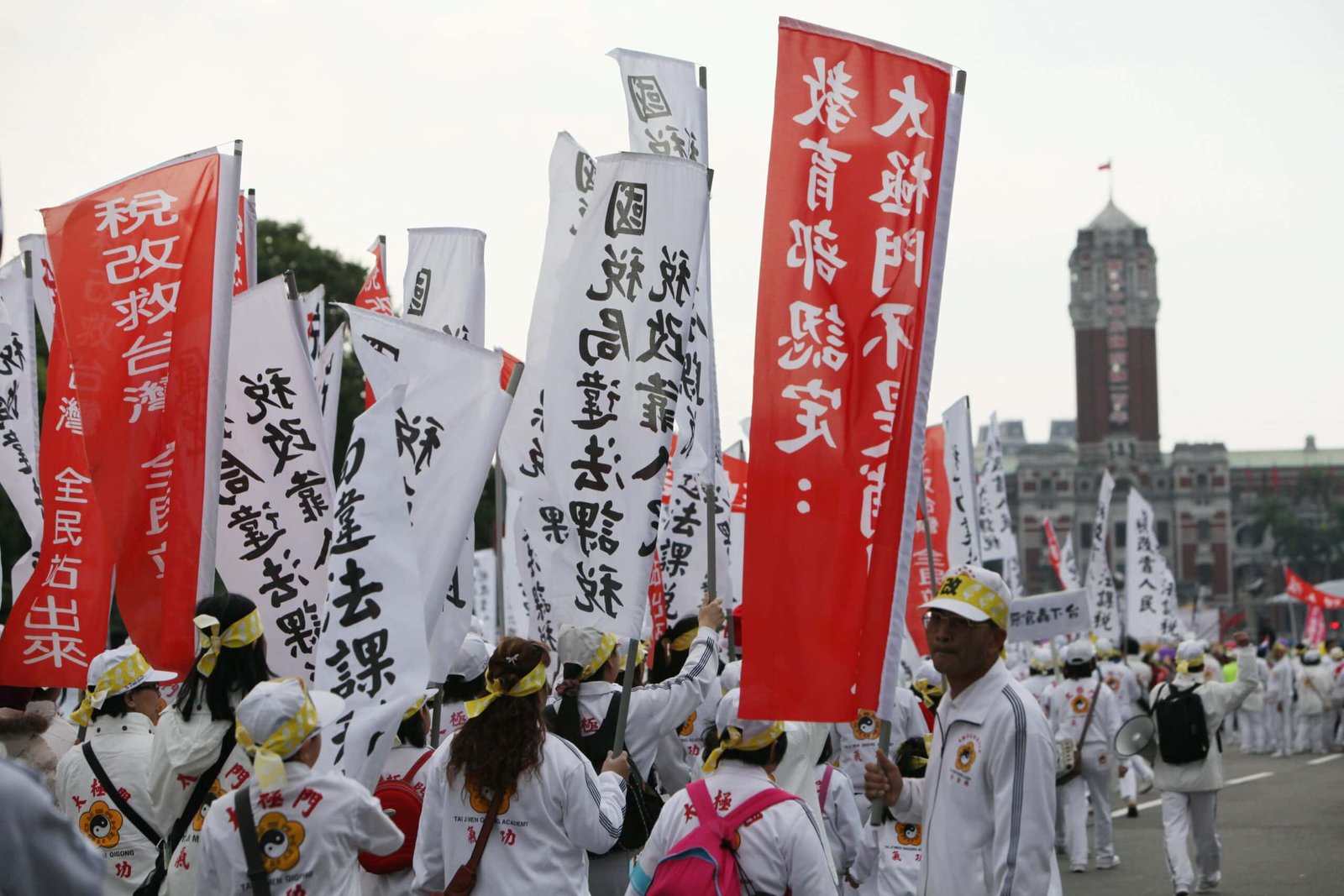
The right to truth is a step towards justice. It is not justice itself, but it approaches justice through truth. Truth implies knowing how and under what circumstances the rights of the victims were violated. It demands that the government investigates and repair the damage caused by those violations. It asks that never again will the government repeat the persecution and repression of a particular group or faith.
This right must be especially defended when there are in the world repressive regimes that attempt to rewrite the past to erase the violation of human rights from history and memory. For this reason, victims of abuse cannot—and perhaps should not—forget these violations. To do so, collective memory takes on a sense of historical transcendence by preserving in monuments, museums, archives, images, and public records what the persecution and violation of the rights meant.
The days of observance established by the United Nations, such as today, precisely try to preserve in the historical memory the search for the truth, and the human dignity of the victims.
For this reason, Tai Ji Men calls for transitional justice, because the search for the truth and the approach to justice have to do with the victims, with those who have suffered persecution, imprisonment, stigmatization, and dispossession of their property.
Finally, I would like to highlight one more idea in relation to transitional justice. Transitional justice is understood or defined as the variety of processes and mechanisms associated with a society’s attempts to resolve the problems stemming from a past of large-scale abuses, and to hold those responsible accountable for their actions. I am interested in rescuing this idea of transitional justice as an attempt to restore accountability and the Tai Ji Men case, because the specific demands of Tai Ji Men do not primarily aspire to punish the perpetrators but to honor the victims, proclaim the innocence of their Shifu, and comply with the other requests I have mentioned above.
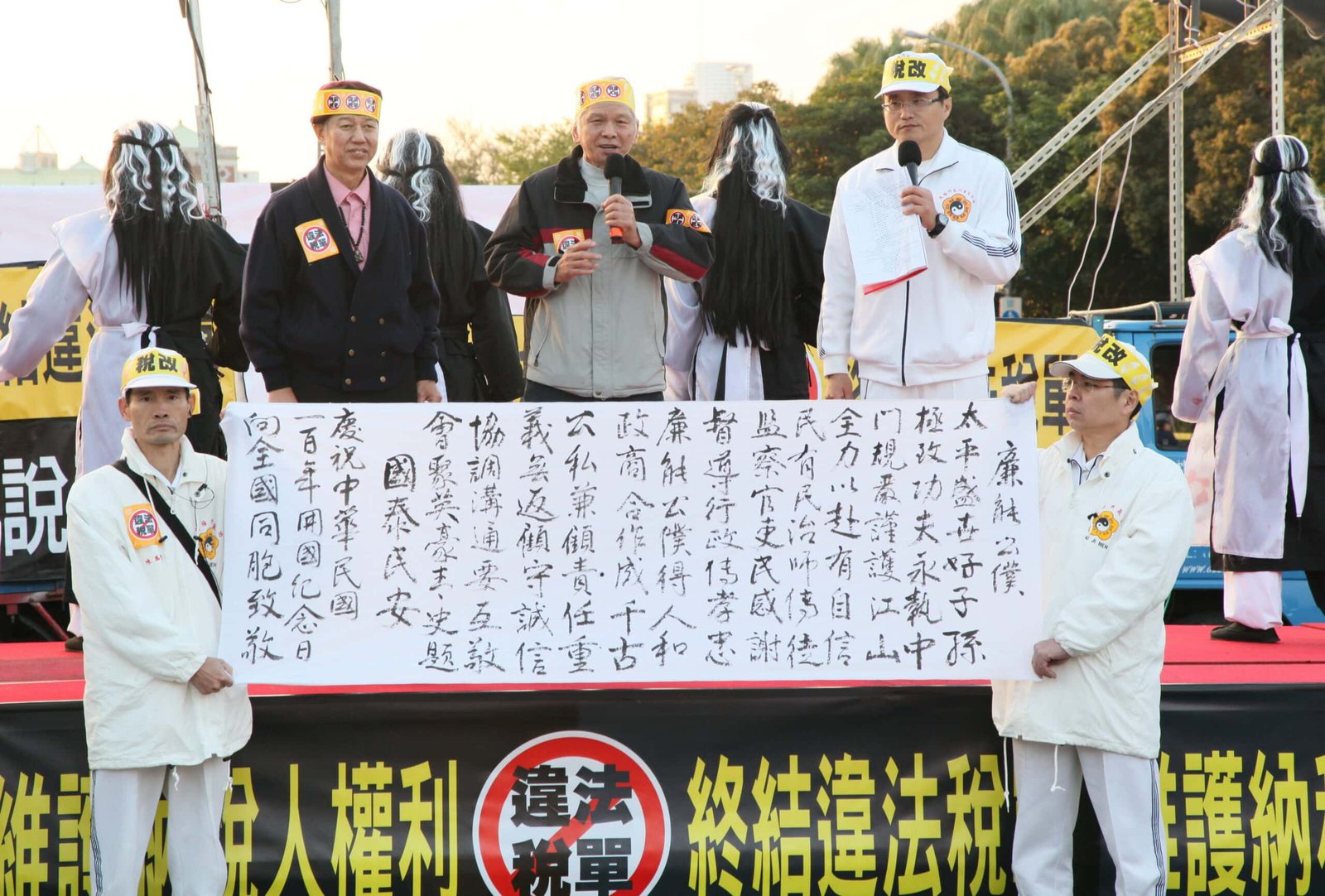
That leads me to think about the nobility and legitimacy of Tai Ji Men’s demands. We can perhaps propose the constitution of a permanent Truth Commission in Taiwan, made up of entities and personalities outside the government, who can examine the requests and demands of Tai Ji Men.
Finally, from the place where I am, I acknowledge the struggle sustained by Tai Ji Men for almost three decades. Sooner or later justice will come to their cause.

Sara Susana Pozos Bravo earned her B.A. and M.A. in International Studies at the University of Guadalajara, and her doctorate in International Relations at Madrid’s Universidad Complutense. She is a research professor at Universidad Sämann de Jalisco in Guadalajara, Mexico, and a well-known columnist in her country.