Grigory Mikhnov-Vaitenko belongs to the Apostolic Orthodox Church, the anti-Kirill group inspired by the late dissident priest Gleb Yakunin.
by Massimo Introvigne

The Solovetsky Stone in Saint Petersburg is a monument to the victims of the Soviet repression. Completed in 2002, it consists of a large stone taken from the infamous Solovki Detention Camp on the White Sea’s Solovetsky Islands.
Archbishop Grigory Mikhnov-Vaitenko of the Apostolic Orthodox Church announced on social media that on February 17 he will hold at this highly symbolic location a memorial service for the dissident Alexei Navalny, who died on February 16, yet another victim of the brutality of Putin’s criminal regime.
Mikhnov-Vaitenko never made it to the Solovetsky Stone. As soon as he exited his home from the front door, he was arrested. On February 17, he had a suspicious “stroke” while he was interrogated at the police station and was taken to the hospital. Some followers, however, gathered at any rate at the Solovetsky Stone and commemorated Navalny. Some were arrested.

The Archbishop had been repeatedly denounced by Alexander Dvorkin and Alexander Novopashin, the leaders of a Russian anti-cult organization that was affiliated until March 2023 with the French-supported European federation of anti-cult movements FECRIS. Mikhnov-Vaitenko had taken a brave stand against the liquidation of the Jehovah’s Witnesses and the persecution of the Church of the Last Testament founded by the arrested spiritual master Vissarion (Sergei Torop).
Mikhnov-Vaitenko opposed the Russian aggression against Ukraine since 2014. In the Summer of 2022, his wife Natalia Sivokhina (all branches of the Orthodox Church ordain married men) was arrested for posting on VKontakte against the war.
The Orthodox authorities rushed to issue a statement that Mikhnov-Vaitenko is not in communion with the Moscow Patriarchate and should be ignored. The first statement is true and even unnecessary. The raison d’être of the Apostolic Orthodox Church is to oppose the Moscow Patriarchate and to denounce it as an organization that has sold its soul to Putin, as it did in the past with the Soviet state and the KGB. Although dissident priest Gleb Yakunin, who died in 2014, is sometimes mentioned as its “founder,” it existed as an anti-Patriarchate organization before he joined it.

Yakunin, a hero of the struggle for religious freedom in the Soviet Union, was defrocked by the Moscow Patriarchate under various pretexts. In fact, his sin was to have unveiled and published documents proving that several bishops and thousands of priests, including the then patriarch Alexy II, had worked for the KGB in Soviet times.
Mikhnov-Vaitenko is proud not to be affiliated with the Moscow Patriarchate. It is for this very reason that he should be heard.
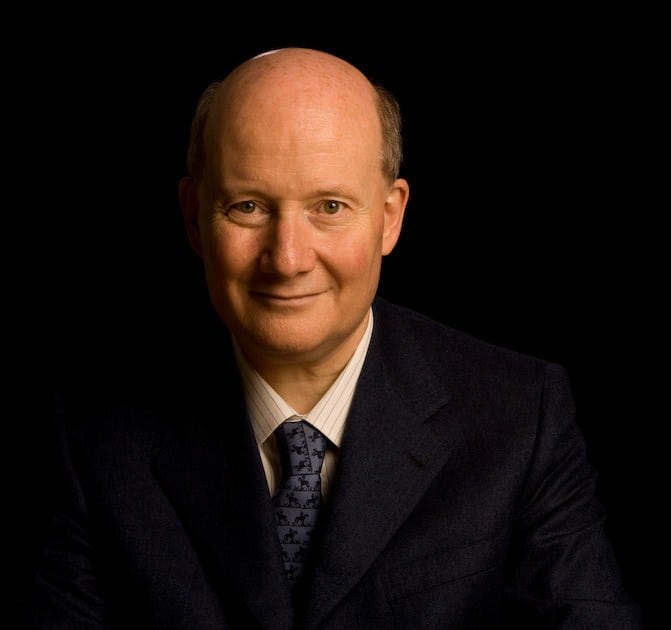
Massimo Introvigne (born June 14, 1955 in Rome) is an Italian sociologist of religions. He is the founder and managing director of the Center for Studies on New Religions (CESNUR), an international network of scholars who study new religious movements. Introvigne is the author of some 70 books and more than 100 articles in the field of sociology of religion. He was the main author of the Enciclopedia delle religioni in Italia (Encyclopedia of Religions in Italy). He is a member of the editorial board for the Interdisciplinary Journal of Research on Religion and of the executive board of University of Pennsylvania Press’ Nova Religio. From January 5 to December 31, 2011, he has served as the “Representative on combating racism, xenophobia and discrimination, with a special focus on discrimination against Christians and members of other religions” of the Organization for Security and Co-operation in Europe (OSCE). From 2012 to 2015 he served as chairperson of the Observatory of Religious Liberty, instituted by the Italian Ministry of Foreign Affairs in order to monitor problems of religious liberty on a worldwide scale.