The cricket player was banned for fixing matches in 2012. Now he claims he was framed because he was a Hindu, and confessed only because his life was threatened.
by Massimo Introvigne
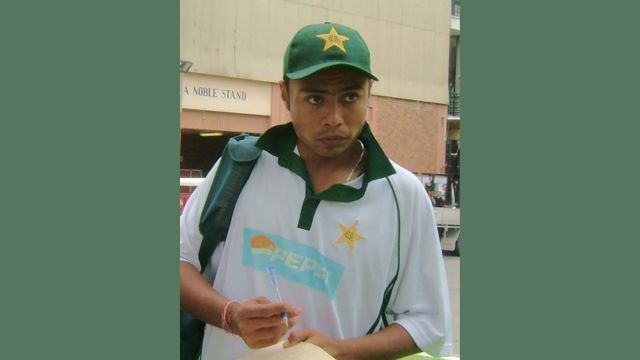
Cricket is immensely popular in Pakistan. The name of Danish Kaneria, although unknown to those who do not follow the sport, is still well remembered there. He played repeatedly for Pakistan’s national cricket team between 2000 and 2010. From 2004, he also played for Essex in the England County Championship.
Then in 2010, his world collapsed. He was involved in an international match-fixing and betting scandal and banned for life from playing professional cricket in 2012. He claimed he was innocent until 2018, when he publicly admitted the charges.
This happened five years ago and seemed to have brought the Kaneria case to a close. Now, however, Kaneria himself has told a different story in an interview published on October 29. Kaneria is a Hindu, and he claims that teammates in Pakistan’s national team tried to convert him to Islam, threatening retaliation if he would refuse.
“Many big players in the Pakistani team asked me to convert to Islam, [long-time Pakistan national team’s captain] Shahid Afridi was the main one among those players.” After he refused, he said, “I was wrongfully trapped in a false allegation of spot-fixing.”
But why did he confess in 2018? He was receiving death threats, he claims, and he was told in so many words that he would not have a normal life if he would not confess. “I confessed because I was receiving threats, my bank accounts were frozen, everything was sealed illegally, and I had no choice but to accept their terms for the sake of my family’s survival.” He maintains that what is true is only that, through other players, he met a bookmaker called Anu Bhat, a main figure in the match-fixing scandal. But he says he did not fix any match.
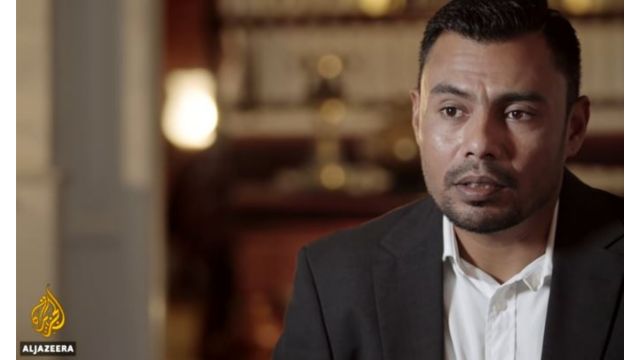
Kaneria realizes that many would not believe him. His cricket career ended anyway. He told interviewers that for him it is now more important to denounce the anti-Hindu and anti-religious-minorities climate prevailing in Pakistani sport than to persuade the public opinion that he was innocent. Recalling his days as a player in Pakistan’s national team, Kaneria said that as a Hindu, “Whatever I have faced in the Pakistani Cricket Team is horrific. They hurled religious abuses at me. They abused my deities…”

Massimo Introvigne (born June 14, 1955 in Rome) is an Italian sociologist of religions. He is the founder and managing director of the Center for Studies on New Religions (CESNUR), an international network of scholars who study new religious movements. Introvigne is the author of some 70 books and more than 100 articles in the field of sociology of religion. He was the main author of the Enciclopedia delle religioni in Italia (Encyclopedia of Religions in Italy). He is a member of the editorial board for the Interdisciplinary Journal of Research on Religion and of the executive board of University of Pennsylvania Press’ Nova Religio. From January 5 to December 31, 2011, he has served as the “Representative on combating racism, xenophobia and discrimination, with a special focus on discrimination against Christians and members of other religions” of the Organization for Security and Co-operation in Europe (OSCE). From 2012 to 2015 he served as chairperson of the Observatory of Religious Liberty, instituted by the Italian Ministry of Foreign Affairs in order to monitor problems of religious liberty on a worldwide scale.