Russian anti-cultists suggest that, rather than arguing that in Ukraine “there are cults,” it is now time to identify “Ukraine” not as a country but as a “cult.”
by Massimo Introvigne

The propaganda of the Russian anti-cult organization led by Novosibirsk Archpriest Alexander Novopashin, part of the European anti-cult federation FECRIS until March 2023, has long insisted that the Ukrainian government is controlled by “cults.”
As the war of aggression against Ukraine continues, Novopashin’s website has decided to go one step further. In an article signed by Tatiana Statsenko, who works for Russian propaganda media in the occupied territories of Ukraine, Novopashin’s organ now argues that “Ukraine” in itself should be best described not as a country but as a “cult.” After it separated from the Soviet Union, in the territory of Ukraine “one of the most inhuman brainwashing experiments was carried out,” and “Ukraine became a huge cult,” according to a plan created and directed from the United States.
“Cult,” according to the anti-cult models embraced by Novopashin and his friends, exploit previous vulnerability. This was the case of Ukraine, who always had the inferiority complex of being the despised “little brother” of Russia. “It was this complex that Western puppeteers began to excite” when they started converting Ukraine from a territory into a “cult.”
“Cults,” we are told, separate their members from the families, and the “cult” called Ukraine separated Ukrainians from their true family, Russia. “Cults” promise this-worldly happiness, and Ukraine is a “cult” promised happiness through becoming a member state of the European Union. But in fact, Novopashin’s website tells us, entering the EU would mean for Ukrainians “increasing tariffs, ruin of industry, etc., etc.” (strangely, this did not happen in other Eastern European countries).
“Cults,” according to the pseudo-scientific Novopashin model, use “brainwashing” and turn their followers into “zombies.” The Ukraine cult controls its devotees, i.e., the Ukrainians, through “mass zombification, turning every person into part of the crowd, imposing collective behavior and collective thinking at the level of reflexes.”

The result is that Ukrainians, or most of them, are now “cultists who not only lie to themselves and those around them, they cease to accept other opinions that differ from those instilled in them by the cult. Therefore, simply talking, convincing, proving is a useless and worthless task.” Since they cannot be persuaded by dialogue and rational arguments, the “special military operation” was needed. “We must remember, the article concludes, that the war is not for territory, the war is for souls. And in one form or another it will continue until the activities of the cult cease.”
Russian anti-cultists continue to offer increasingly preposterous arguments to justify Putin’s crimes and horrors in Ukraine. “Cults” are de-humanized by their rhetoric, and by being “cultists” Ukrainians are something less than humans. The war is finally describes as a giant collective deprogramming—and those who cannot be successfully deprogrammed are killed.
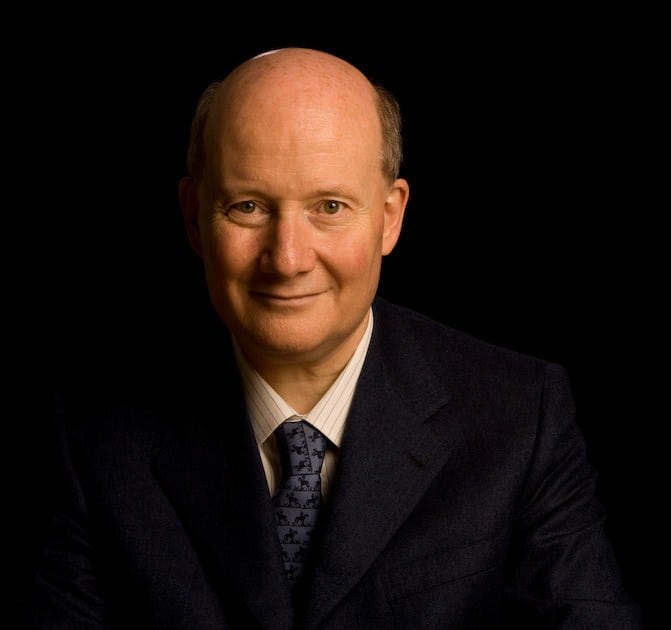
Massimo Introvigne (born June 14, 1955 in Rome) is an Italian sociologist of religions. He is the founder and managing director of the Center for Studies on New Religions (CESNUR), an international network of scholars who study new religious movements. Introvigne is the author of some 70 books and more than 100 articles in the field of sociology of religion. He was the main author of the Enciclopedia delle religioni in Italia (Encyclopedia of Religions in Italy). He is a member of the editorial board for the Interdisciplinary Journal of Research on Religion and of the executive board of University of Pennsylvania Press’ Nova Religio. From January 5 to December 31, 2011, he has served as the “Representative on combating racism, xenophobia and discrimination, with a special focus on discrimination against Christians and members of other religions” of the Organization for Security and Co-operation in Europe (OSCE). From 2012 to 2015 he served as chairperson of the Observatory of Religious Liberty, instituted by the Italian Ministry of Foreign Affairs in order to monitor problems of religious liberty on a worldwide scale.