It also reports eleven “Internet blasphemers” have been sentenced to death, and two of the sentences have already been confirmed on appeal.
by Massimo Introvigne
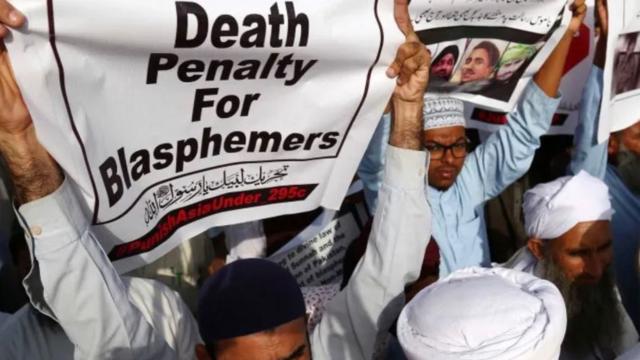
We know Pakistan punishes blasphemy with the death penalty, but how many blasphemers are there in Pakistan? From July 13, we have an answer, thanks to a report by the Ministry of Religious Affairs and Interfaith Harmony. It claims that 400,000 social media accounts spread “extremely blasphemous material against the most revered figures, including Allah Almighty (God), the Prophet Muhammad (Peace Be Upon Him), the Ahl al-Bayt (Prophet’s family), the Mothers of the Believers, the Companions of the Prophet, the Holy Quran, and the national flag [of Pakistan, which includes Islamic symbols].”
Even considering that the same individual may have multiple accounts, the number of those risking the death penalty is enormous. Through which method the Ministry arrived at the figure of 400,000 and the claim that an “epidemic” of blasphemy is hitting Pakistan is not explained.
Doubts arise when we read in the report that, among the owners of these 400,000 accounts spreading blasphemy, “the FIA [Federal Investigation Agency] Cyber Crime Wing has already apprehended 140 individuals involved in these crimes, with 11 of them having received the death penalty from trial courts and two having their death sentences confirmed by the High Court.”
Death penalties imposed against those accused of blasphemy remain a tragic violation of human rights, but the contrast between the alleged 400,000 accounts “dragging the new generation into the quagmire of blasphemy” and the 140 arrests is interesting. The report assures us that this is not caused by an ineffectiveness of the FIA. On the contrary, “There are 15 Cyber Crime units throughout the country under the jurisdiction of the FIA. These units have already established Anti-Blasphemy Cells, and immediate action is taken upon receiving reports in response to requests made to these cells. Cyber Crime technology traces criminals who engage in offensive activities on any social media application, share derogatory material on any website, or use VPNs. Once apprehended, these individuals are arrested and face legal action in accordance with the law.”
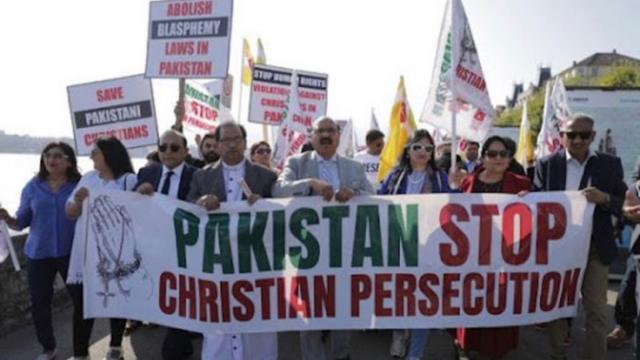
One can thus suspect that the number of 400,000 is just a figment of some anti-blasphemy bureaucrat’s imagination, publicized to justify the harsher measures against blasphemy introduced to appease Muslim extremists, and the increasing number of false cases where devotees of minority religions are prosecuted for social media remarks that either were not blasphemous or they never made.

Massimo Introvigne (born June 14, 1955 in Rome) is an Italian sociologist of religions. He is the founder and managing director of the Center for Studies on New Religions (CESNUR), an international network of scholars who study new religious movements. Introvigne is the author of some 70 books and more than 100 articles in the field of sociology of religion. He was the main author of the Enciclopedia delle religioni in Italia (Encyclopedia of Religions in Italy). He is a member of the editorial board for the Interdisciplinary Journal of Research on Religion and of the executive board of University of Pennsylvania Press’ Nova Religio. From January 5 to December 31, 2011, he has served as the “Representative on combating racism, xenophobia and discrimination, with a special focus on discrimination against Christians and members of other religions” of the Organization for Security and Co-operation in Europe (OSCE). From 2012 to 2015 he served as chairperson of the Observatory of Religious Liberty, instituted by the Italian Ministry of Foreign Affairs in order to monitor problems of religious liberty on a worldwide scale.