Anti-cultists persuaded Russian authorities that fans of a Japanese comic are “cultists” controlled by Ukraine—where they are also arrested, as “Russian agents.”
by Massimo Introvigne

If it were not for the fact that hundreds of innocent young men (and some young women) are in jail, the story of the “PMC Ryodan Cult” would be one of the most exhilarating of the year, and an irresistible topic to write about for somebody like the undersigned, who studies both comics and new religious movements. The story has everything: mysterious esoteric symbols, espionage, the war in Ukraine, and a possible involvement of Vladimir Putin himself.
The Ryodan saga has been brilliantly reported elsewhere, but other media have missed a piece of the puzzle: the role of the very active Russian anti-cult movement. In a nutshell, one Japanese comic (manga) popular in Russia and in the neighboring countries is called “Hunter x Hunter.” It is written and designed by Yoshihiro Togashi, has been transferred to a Japanese cartoon (anime) and video games, and it is not exactly new, as its first volume was published in 1998. Among the characters of “Hunter x Hunter” is an organizations of thieves called “Ryodan,” who wear a black uniform with the image of a spider on the back and a number inside the spider. They also have long hair dyed in black.
As it often happens, literary villains may become more popular than heroes, and a subculture of manga and anime fans calling themselves “Ryodans,” dressed like the thieves in the comic and sporting long black hair includes thousands of Russian teenagers, as well as at least hundreds of their Ukrainian and Belorussian counterparts. They existed quietly for years, although right-wing extremists calling themselves “Anti-Ryodans” sometimes attacked them shouting homophobic slogans and claiming that most Ryodans were gays, or at least looked like they were.
Things changed with the war in Ukraine. Mostly on the web, the Ryodans started calling themselves “Private Military Company Ryodan” or “PMC Ryodan,” a way of mocking the Private Military Company Wagner, which is not reputed for its sense of humor. Some particularly violent crashes between Ryodans and Anti-Ryodans followed in shopping malls in various Russian cities in February 2022, perhaps instigated by the Wagner, but there were no casualties and nothing that went really beyond a common brawl between highs school students.

As mentioned earlier, a part of the story several media have missed is the role of the Russian anti-cult organizations, whose “experts” happily announced they had discovered a new “cult,” like most others organized by the “Ukrainian services” and the “Western intelligence” to destabilize Russia. Since the anti-cultists are taken more seriously than usually during the Ukrainian war, Russian media reported that Putin himself was concerned, and the FSB arrested thousands of youth. One could read on the website of the Russian anti-cultist Alexander Novopashin that, “Destabilization through the buildup of youth is an effective tool that has been used by Western intelligence services for decades.”
This paranoia is common in Russia, and is fueled by anti-cultists to demonstrate that they have a useful and patriotic function to play. The peculiarity of this case is that the Ryodans do look “strange,” so much so that the Russian anti-cult propaganda for once found its way not only into Belarus, which is normal, but into Ukraine, where hundreds of Ryodans were also arrested starting from February 2023. Only, in Ukraine the story was turned on its head, and the Ryodans were accused of being Russian agents. Police in Kyiv told the media that the Ryodans represent “an attempt by propagandists from the aggressor country [Russia] to carry out another informational and psychological operation using Ukrainian teenagers.”

Perhaps the story is less unique than it seems. In times of war, those who look “strange” and wear unfamiliar uniforms are easily mistaken for spies. In Russia, the operative word is “cultists deployed as saboteurs and spies by Ukraine and the West.”
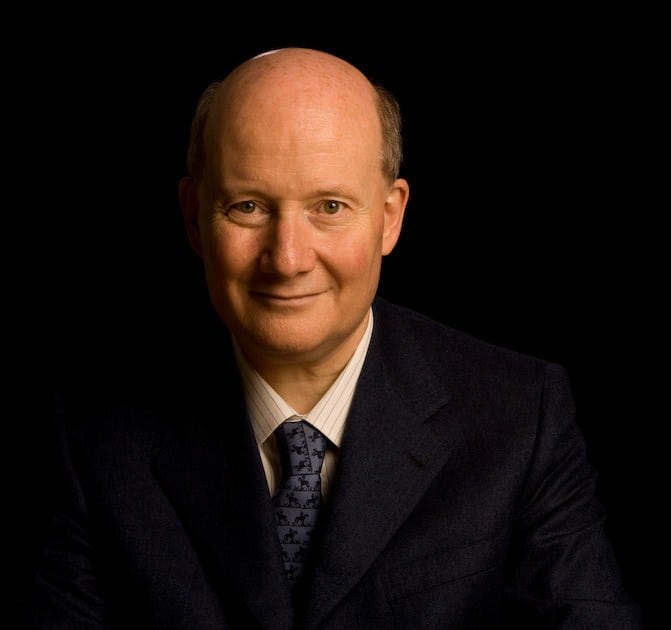
Massimo Introvigne (born June 14, 1955 in Rome) is an Italian sociologist of religions. He is the founder and managing director of the Center for Studies on New Religions (CESNUR), an international network of scholars who study new religious movements. Introvigne is the author of some 70 books and more than 100 articles in the field of sociology of religion. He was the main author of the Enciclopedia delle religioni in Italia (Encyclopedia of Religions in Italy). He is a member of the editorial board for the Interdisciplinary Journal of Research on Religion and of the executive board of University of Pennsylvania Press’ Nova Religio. From January 5 to December 31, 2011, he has served as the “Representative on combating racism, xenophobia and discrimination, with a special focus on discrimination against Christians and members of other religions” of the Organization for Security and Co-operation in Europe (OSCE). From 2012 to 2015 he served as chairperson of the Observatory of Religious Liberty, instituted by the Italian Ministry of Foreign Affairs in order to monitor problems of religious liberty on a worldwide scale.