Some media have criticized the text as an “answer” to the so-called “Seattle Caste Law.” But the campaign for the Resolution had started before the Seattle controversies.
by Massimo Introvigne

On March 31, the American State of Georgia became the first in the U.S. to pass a resolution against Hinduphobia. The resolution was sponsored by Republican State legislators Lauren McDonald and Todd Jones. They represent Forsyth County, which has a substantial Hindu presence.
The Resolution notes that, “Hinduism is one of the world’s oldest and largest religions with more than 1.2 billion followers in over 100 countries. It is a religion which encompasses an array of belief systems and diverse traditions with values of acceptance, mutual respect and peace.” It also praises the multiple contribution of American Hindus to U.S. culture, science, medicine, food, sport, and the arts.
The Resolution defines Hinduphobia as “a set of antagonistic, destructive, and derogatory attitudes and behaviors towards Sanatana Dharma (Hinduism) and Hindus that may manifest as prejudice, fear, or hatred.”
The Resolution cites both documented hate crimes against Hindus, and an anti-Hindu bias in the media and some academic circles. It was passed thanks to the efforts of
the Atlanta chapter of the Coalition of Hindus of North America (CoHNA), which organized a Hindu Advocacy Day on March 22 at the Georgia State Capitol.
Some media have criticized the resolution as an “answer” to the February ordinance by the City of Seattle who denounced and banned caste, in addition to gender, as a reason for discrimination, and was criticized by some American Hindu circles.

In fact, however, the campaign for the Georgia anti-Hinduphobia resolution had started before the so-called “Seattle caste law” was first introduced. It relied in particular on a 2022 report by Rutgers University, “Anti-Hindu Disinformation: A Case Study of Hinduphobia on Social Media.” The report noted that hate speech on social media easily degenerated into the crimes and actual violence against American Hindus.
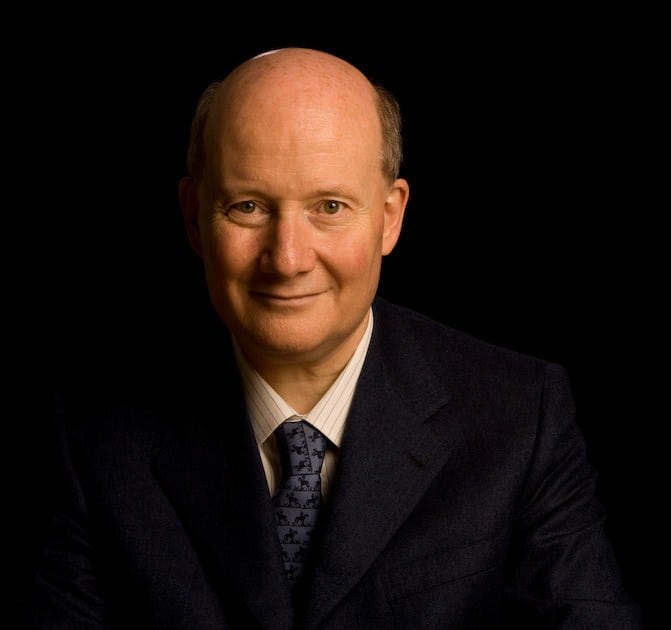
Massimo Introvigne (born June 14, 1955 in Rome) is an Italian sociologist of religions. He is the founder and managing director of the Center for Studies on New Religions (CESNUR), an international network of scholars who study new religious movements. Introvigne is the author of some 70 books and more than 100 articles in the field of sociology of religion. He was the main author of the Enciclopedia delle religioni in Italia (Encyclopedia of Religions in Italy). He is a member of the editorial board for the Interdisciplinary Journal of Research on Religion and of the executive board of University of Pennsylvania Press’ Nova Religio. From January 5 to December 31, 2011, he has served as the “Representative on combating racism, xenophobia and discrimination, with a special focus on discrimination against Christians and members of other religions” of the Organization for Security and Co-operation in Europe (OSCE). From 2012 to 2015 he served as chairperson of the Observatory of Religious Liberty, instituted by the Italian Ministry of Foreign Affairs in order to monitor problems of religious liberty on a worldwide scale.