Sitara Arif was kidnapped on December 15. It took two months to persuade the police to investigate the case.
by Massimo Introvigne
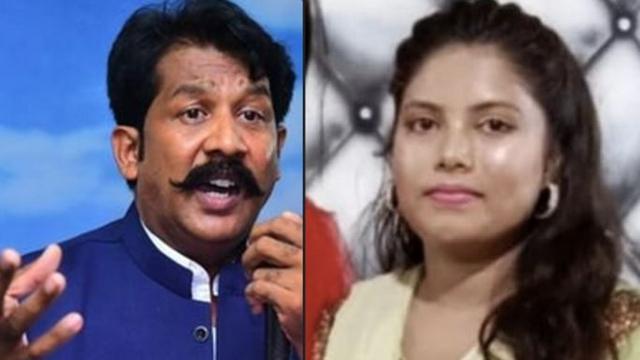
When her father, Arif Gill, allowed his 15-year-old daughter Sitara Arif to accept a job as domestic help for Naila Ambreen, the Muslim principal of a public school in Faisalabad, in Pakistan’s Punjab, he did have some concerns. After all, stories of girls from religious minorities forcibly converted to Islam and married to Muslim men are continuously reported by Pakistani and international media. However, Ambreen was a respected school officer, and Arif trusted her. The fact that Arif was physically handicapped and unable to provide for his family, which desperately needed money, was also a factor in his decision to let Sitara work for a Muslim employer.
Arif’s fears, however, were not unfounded. Rana Tayyab, the 60-year-old husband of Ambreen, quickly noticed the beautiful Sitara and decided to take her as his second wife. It is unclear whether, as it usually happens in these cases, Sitara was first raped and then told that to escape the shame the only solution for her was to consent to the marriage. She did not return home from work on December 15, and her family later heard that she had converted to Islam and married Rana Tayyab.
Her father and mother started asking the police to investigate, but they were not heard and were even threatened. It is only this month, when the family contacted Akmal Bhatti, a well-known attorney and the chairperson of Minorities Alliance Pakistan, that the police finally registered a FIR (First Information Report) and promised to investigate.

Pushed by Bhatti, police officers visited Naila Ambreen’s residence, but neither her husband nor Sitara were at home. The woman, however, showed to the police a nikah, an Islamic marriage certificate, and confirmed that Rana Tayyab had taken Sitara as his second wife. Marrying a minor is now illegal in Pakistan, but Ambreen told the police she believes Sitara is 18.
At the time of this writing, the police is looking for Rana Tayyab and Sitara in Islamabad, where the man allegedly took the young girl. As Attorney Bhatti told the media, the sequence rape-forced conversion to Islam-forced marriage is a model tragically repeating itself every week. He mentioned several cases of Hindu girls who were victims of this criminal practice in 2023. Chanda Maharaj, whose case Bitter Winter covered extensively, has been rescued from her “husband” but is still kept in a shelter home and not allowed to go back to her family, while her kidnapper is not being prosecuted.

Massimo Introvigne (born June 14, 1955 in Rome) is an Italian sociologist of religions. He is the founder and managing director of the Center for Studies on New Religions (CESNUR), an international network of scholars who study new religious movements. Introvigne is the author of some 70 books and more than 100 articles in the field of sociology of religion. He was the main author of the Enciclopedia delle religioni in Italia (Encyclopedia of Religions in Italy). He is a member of the editorial board for the Interdisciplinary Journal of Research on Religion and of the executive board of University of Pennsylvania Press’ Nova Religio. From January 5 to December 31, 2011, he has served as the “Representative on combating racism, xenophobia and discrimination, with a special focus on discrimination against Christians and members of other religions” of the Organization for Security and Co-operation in Europe (OSCE). From 2012 to 2015 he served as chairperson of the Observatory of Religious Liberty, instituted by the Italian Ministry of Foreign Affairs in order to monitor problems of religious liberty on a worldwide scale.