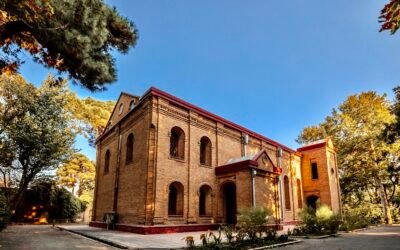
The Peshawar site, connected with the Mahabharata, was given to a local amusement park, which now refuses to give it back.
by Massimo Introvigne

There are numerous ways of desecrating sacred religious sites, but using them as warehouses in an amusement park may well be one of the worst.
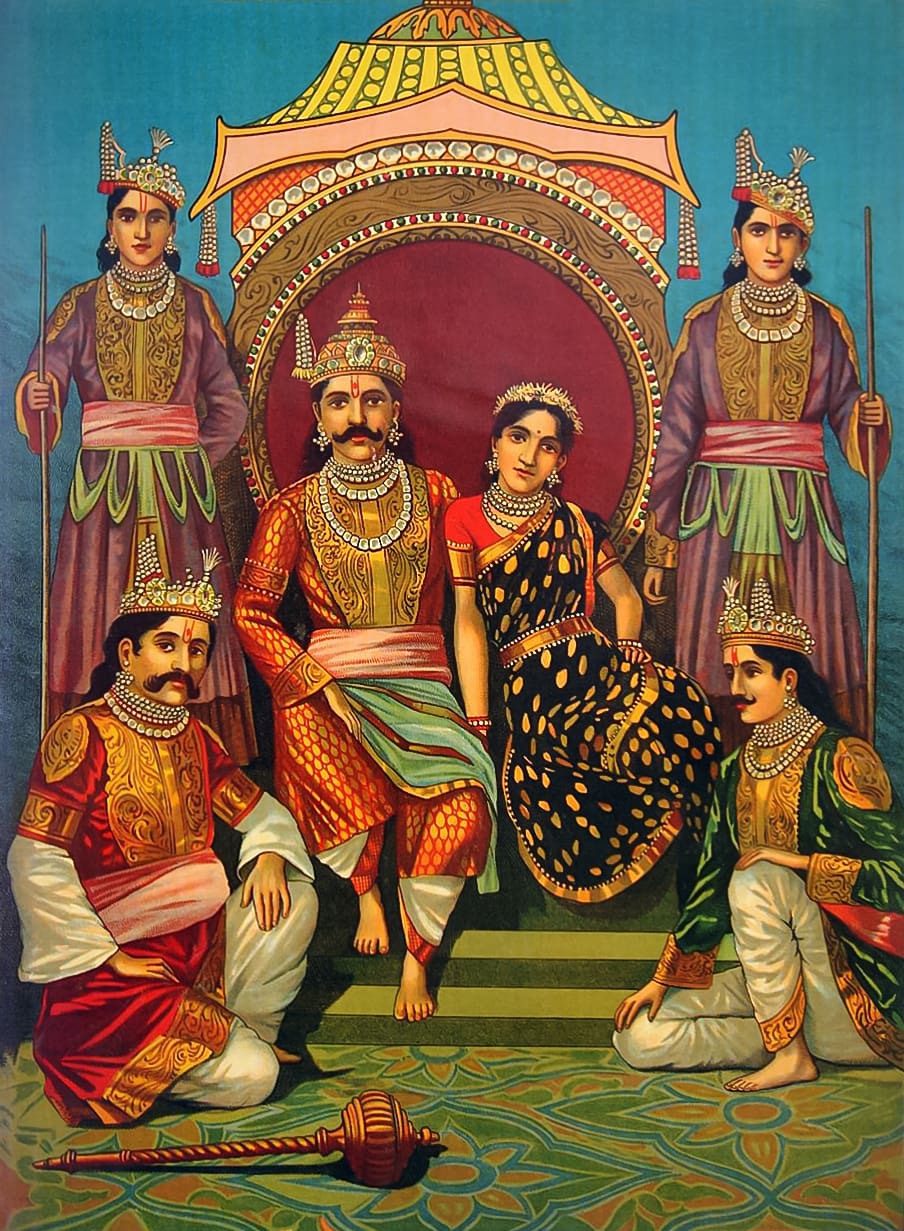
This is what happened to Panj Tirath, once a flourishing Hindu pilgrimage site in Peshawar, the capital of Khyber Pakhtunkhwa province in Pakistan. The name Panj Tirath alludes to five water pools present in the site, which Hindu believe were connected with immediate disciples of the Pandava, the five sons of King Pandu who are the central characters in the Hindu epic “Mahabharata.”
Surely, the Panj Tirath site has been a Hindu pilgrimage center for some 1,000 years. After the Partition, only two dilapidated temples survived, and the area became part of a lease from the local government to the company operating the Chaca Younas Family Park.
As Hindus, historians, and archeologists continued to protest the situation, in 2019 the provincial government of Khyber Pakhtunkhwa declared Panj Tirath a national heritage site. This was, however, the beginning rather than the end of a legal battle.

The amusement park, which uses the temples as warehouses, told the provincial government it was ready to give back one kanal (0.125 acre) and 11 marlas of the site, while archeologists claim it consists of 5 kanals (0.625 acre) and 11 marlas (0.06 acre), which is almost six times more.
The story became worse when archeologists tried to access the site and were intimidated by armed men.

On February 10, the Peshawar High Court expressed its displeasure that after more than three years the issue has not been solved, and hinted at suspects of corruption among local officials.
Beyond the technical issues, the case offers additional evidence of the disrespect in which the historical heritage of Hinduism is often held in Pakistan.

Massimo Introvigne (born June 14, 1955 in Rome) is an Italian sociologist of religions. He is the founder and managing director of the Center for Studies on New Religions (CESNUR), an international network of scholars who study new religious movements. Introvigne is the author of some 70 books and more than 100 articles in the field of sociology of religion. He was the main author of the Enciclopedia delle religioni in Italia (Encyclopedia of Religions in Italy). He is a member of the editorial board for the Interdisciplinary Journal of Research on Religion and of the executive board of University of Pennsylvania Press’ Nova Religio. From January 5 to December 31, 2011, he has served as the “Representative on combating racism, xenophobia and discrimination, with a special focus on discrimination against Christians and members of other religions” of the Organization for Security and Co-operation in Europe (OSCE). From 2012 to 2015 he served as chairperson of the Observatory of Religious Liberty, instituted by the Italian Ministry of Foreign Affairs in order to monitor problems of religious liberty on a worldwide scale.