Myrrh-streaming icons are not new in the Orthodox tradition, but this one in Onega calls for Russians to serve in the Army rather than escaping abroad.
by Massimo Introvigne

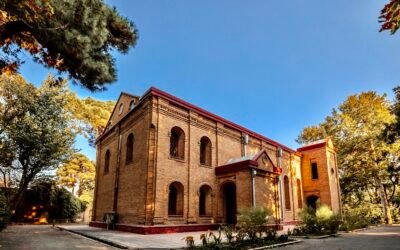
On September 27, which for the Russian Orthodox is the Feast of the Exaltation of the Cross, devotees who had gathered for the Divine Liturgy were leaving the Holy Trinity Cathedral in Onega, a town in the Arkhangelsk Oblast. Suddenly, an icon of Saint George the Victorious started to stream myrrh. The devotees went back and were called by the rector of the cathedral, Archpriest Alexander Koptev, to witness the miracle.
The myrrh (if myrrh it was) was collected with a cloth, which the Archpriest used to anoint the devotees. The phenomenon lasted for half an hour, and repeated itself the following day, September 28. Bishop Alexander of Plesetsk and Kargopol confirmed the miraculous nature of the event.
Statues steaming myrrh are not new in the Russian Orthodox tradition, and we at Bitter Winter have repeatedly expressed respect and even sympathy for those who believe in miracles in different religions. What is, however, both suspicious and interesting is that the alleged miracle has become part of the propaganda to persuade mobilized Russians to serve in the Army and go to Ukraine rather than escaping abroad, as thousands are doing.
The Onega miracle was given prominence by being reported in the national news agency Interfax. Archpriest Koptev told Interfax that the miracle may be interpreted as “evidence of God’s help to the soldiers called to defend the Fatherland.” The dragon-slaying Saint George is the protector of the Russian Army.
To other media, Koptev proposed a specific connection between the Onega miracle and mobilization. He insisted that Saint George “will guard the warriors,” and spoke directly to those who are trying to leave the country to escape mobilization. “Here are the guys leaving Russia now, he said. Why don’t they come into the church? Take a blessing, take communion, confess, and with a calm heart go to defend the Fatherland.”

In March, an icon of the Virgin Mary in the Main Cathedral of the Russian Military Forces in Moscow started streaming blood. The priests interpreted the phenomenon as a blessing to those who were fighting and dying in Ukraine, although on social media some commented that the Virgin was, on the contrary, showing her disapproval of the war.

Massimo Introvigne (born June 14, 1955 in Rome) is an Italian sociologist of religions. He is the founder and managing director of the Center for Studies on New Religions (CESNUR), an international network of scholars who study new religious movements. Introvigne is the author of some 70 books and more than 100 articles in the field of sociology of religion. He was the main author of the Enciclopedia delle religioni in Italia (Encyclopedia of Religions in Italy). He is a member of the editorial board for the Interdisciplinary Journal of Research on Religion and of the executive board of University of Pennsylvania Press’ Nova Religio. From January 5 to December 31, 2011, he has served as the “Representative on combating racism, xenophobia and discrimination, with a special focus on discrimination against Christians and members of other religions” of the Organization for Security and Co-operation in Europe (OSCE). From 2012 to 2015 he served as chairperson of the Observatory of Religious Liberty, instituted by the Italian Ministry of Foreign Affairs in order to monitor problems of religious liberty on a worldwide scale.