The monument has been restored, but may not be re-installed where it once was. The man who attacked it has confessed he planned to kill an Indian politician.
by Massimo Introvigne

The most faithful readers of Bitter Winter may remember that we covered one year ago the August 17, 2021, attack by a Muslim radical against the statue of the first ruler of the Sikh Empire, Maharaja Ranjit Singh, in Lahore, Pakistan. The attacker broke an arm of the statue, and dismantled the Maharaja’s bust from the horse.
Although the attacker was a member of the radical Islamic party Tehreek-e-Labbaik Pakistan (TLP), whose story has been told in a series of articles in Bitter Winter, Pakistani authorities dismissed the attack as perpetrated by a “lonely illiterate.”
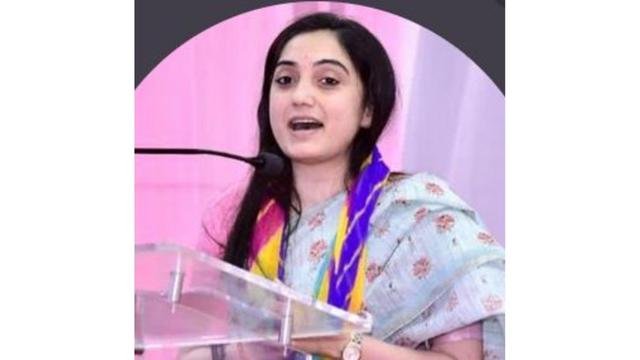
It was an anti-Sikh hate crime, but somebody may have thought that we were paying attention to a minor incident. In retrospect, we were almost prophetic. The attacker, Rizwan Ashraf, is now an international celebrity. He has been arrested when entering India where, as he confessed, he intended to kill Nupur Sharma. The latter was one of the spokespersons for the Indian ruling party BJP, but lost her job after she was accused of having offended Prophet Muhammad in a television debate (she claims the video of the debate was maliciously edited by her opponents).
Meanwhile, the Sikh community has restored the statue, and hoped it could be placed again at the Lahore Fort where it was. However, local authorities claim that this would invite further attacks and have proposed to place the statue instead in the Sikh Gallery inside the Royal Fort.
The Sikh Gallery is a sort of a museum room illustrating the role of the Sikhs in the history of Lahore. Clearly, placing the statue there would have a different meaning that having it in an open space, thus publicly honoring Maharaja Ranjit Singh.
Many Sikh believe that if the statue is not restored to its previous position, the Pakistani authorities would implicitly admit that they are not capable of maintaining the public order, and Ashraf, a terrorist, would have won its battle.
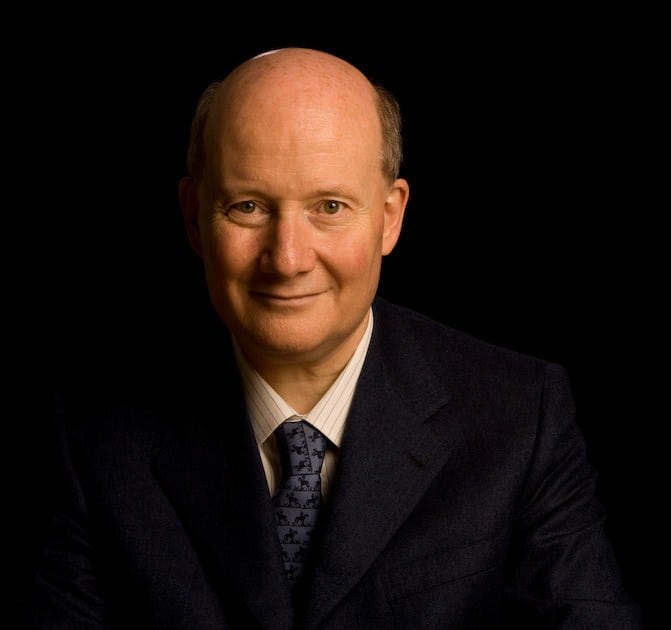
Massimo Introvigne (born June 14, 1955 in Rome) is an Italian sociologist of religions. He is the founder and managing director of the Center for Studies on New Religions (CESNUR), an international network of scholars who study new religious movements. Introvigne is the author of some 70 books and more than 100 articles in the field of sociology of religion. He was the main author of the Enciclopedia delle religioni in Italia (Encyclopedia of Religions in Italy). He is a member of the editorial board for the Interdisciplinary Journal of Research on Religion and of the executive board of University of Pennsylvania Press’ Nova Religio. From January 5 to December 31, 2011, he has served as the “Representative on combating racism, xenophobia and discrimination, with a special focus on discrimination against Christians and members of other religions” of the Organization for Security and Co-operation in Europe (OSCE). From 2012 to 2015 he served as chairperson of the Observatory of Religious Liberty, instituted by the Italian Ministry of Foreign Affairs in order to monitor problems of religious liberty on a worldwide scale.