A typically French decision by the Council of State states that head-to-ankle swimwear violates the sacred principle of laïcité while uncovering the breasts is OK.
by Massimo Introvigne

French have a delicious expression, “franco-français,” to indicate questions they debate between themselves and foreigners have a hard time understanding. It is within this category that we can place a bizarre decision by the French Council of State of July 21. Even more bizarre is the triumphant reaction of Interior Minister Gérald Darmanin in a tweet celebrating “a victory for the law on ‘separatism,’ for the laïcité and, beyond this, for the Republic as a whole.”
Readers of Bitter Winter may remember that in 2021 we covered extensively a French law originally referred to “separatism,” i.e., aimed at combating the tendency of religious minorities to live “separately” from mainline society.
After widespread criticism, the name of the law was changed to one defending “the principles of the Republic,” and President Macron suggested that the word “separatism” should not be used, something he should perhaps now explain to his Interior Minister.
There is an old controversy in France on Muslim women wearing head-to-ankle swimwear (nicknamed burkini) in public beaches and swimming pools. In fact, covering the whole body when swimming is also practiced by some orthodox Jewish and Christian conservative women, but for whatever reason if Muslim women do it this is regarded in France as a sign of “separatism.”
The Mayor of Grenoble decided to accommodate Muslim and other conservative women by allowing head-to-ankle swimwear in the city’s swimming pools. Least somebody may accuse him of being conservative, the good Mayor at the same time also allowed women to swim topless in Grenoble.
It did not work out. The Council of State left untouched the regulation on topless but quashed the one on the head-to-ankle swimwear as against the supreme values of laïcité and the “principles of the Republic.” Women who wear the “burkini” affirm their religion and their “separatism” in public, the decision said.
It remains to be seen if Christian fundamentalist and Jewish Orthodox women will be equally prohibited from covering their bodies in French swimming pools. For the time being, they are told that of one thing only they may be sure, that uncovering their breasts is in harmony with the “principles of the Republic.”
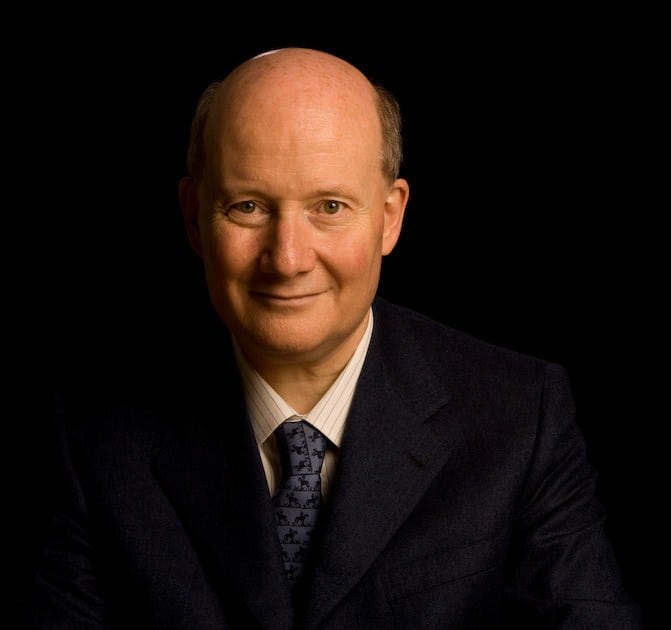
Massimo Introvigne (born June 14, 1955 in Rome) is an Italian sociologist of religions. He is the founder and managing director of the Center for Studies on New Religions (CESNUR), an international network of scholars who study new religious movements. Introvigne is the author of some 70 books and more than 100 articles in the field of sociology of religion. He was the main author of the Enciclopedia delle religioni in Italia (Encyclopedia of Religions in Italy). He is a member of the editorial board for the Interdisciplinary Journal of Research on Religion and of the executive board of University of Pennsylvania Press’ Nova Religio. From January 5 to December 31, 2011, he has served as the “Representative on combating racism, xenophobia and discrimination, with a special focus on discrimination against Christians and members of other religions” of the Organization for Security and Co-operation in Europe (OSCE). From 2012 to 2015 he served as chairperson of the Observatory of Religious Liberty, instituted by the Italian Ministry of Foreign Affairs in order to monitor problems of religious liberty on a worldwide scale.