An Evangelical objected that swearing in general is forbidden by the Bible. A court authorized her to simply “promise” loyalty to the country.
by Massimo Introvigne

Several countries ask new citizen to swear an oath of allegiance to the country and the Constitution. So does Argentina through article 23 of its law on citizenship.
However, several conservative Christian denominations and religious movements interpret literally the Gospel of Matthew 5:34–37, where Jesus commands: “But I tell you, do not swear an oath at all: either by heaven, for it is God’s throne; or by the earth, for it is his footstool; or by Jerusalem, for it is the city of the Great King. And do not swear by your head, for you cannot make even one hair white or black. All you need to say is simply ‘Yes’ or ‘No’; anything beyond this comes from the evil one.”
In the past, some countries had formulas that required to swear by God’s name, to which both atheists and some religionists, for opposite reasons, raised objections. Most of them have disappeared. However, there are Christians who interpret Matthew 5:34–37 as a prohibition against swearing in general.
An Evangelical Christian who had otherwise fulfilled the conditions to become a new citizen of Argentina refused to swear the oath of allegiance, arguing that “the Bible clearly indicates that swearing is not allowed. God only has the right to swear.” Although she indicated that she was willing to “promise” what she felt she could not “swear,” she was denied citizenship, and appealed to the Second Federal Court of Mar del Plata.
The decision was rendered on October 20, 2021. The judges quoted previous Argentinian cases concerning the Jehovah’s Witnesses, who were authorized not to sing the national anthem or salute the flag, which they refuse to do based on Biblical arguments.
In fact, judge Santiago José Martín said, conscientious objection to swearing is not mentioned by any law, while there are laws protecting conscientious objectors who refuse to serve in the military or to take part in performing abortions. However, when interpreted considering the American Convention on Human Rights, the Argentinian system may be deemed to include, at least implicitly, a general principle allowing for religion-based conscientious objection. Courts, the judge said, are also called to protect religious liberty.
Freedom of religion may only be limited by compelling interests of the state. But, the decision concluded, the state does not have a compelling interest in having new citizens “swearing” rather than “promising” allegiance to the country and the Constitution. The complainant was authorized to replace the words “I swear” with “I promise” in the oath of allegiance.
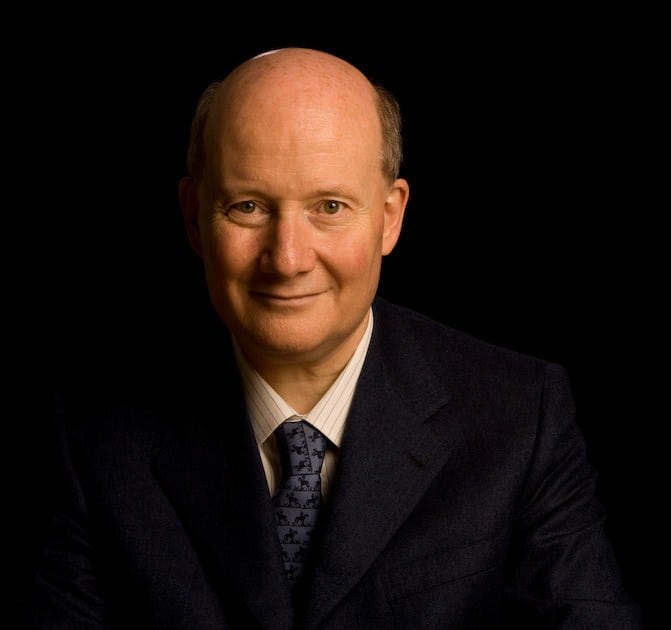
Massimo Introvigne (born June 14, 1955 in Rome) is an Italian sociologist of religions. He is the founder and managing director of the Center for Studies on New Religions (CESNUR), an international network of scholars who study new religious movements. Introvigne is the author of some 70 books and more than 100 articles in the field of sociology of religion. He was the main author of the Enciclopedia delle religioni in Italia (Encyclopedia of Religions in Italy). He is a member of the editorial board for the Interdisciplinary Journal of Research on Religion and of the executive board of University of Pennsylvania Press’ Nova Religio. From January 5 to December 31, 2011, he has served as the “Representative on combating racism, xenophobia and discrimination, with a special focus on discrimination against Christians and members of other religions” of the Organization for Security and Co-operation in Europe (OSCE). From 2012 to 2015 he served as chairperson of the Observatory of Religious Liberty, instituted by the Italian Ministry of Foreign Affairs in order to monitor problems of religious liberty on a worldwide scale.