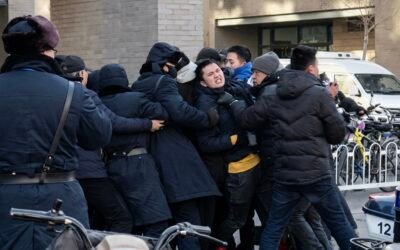
Accusations against True Buddha School devotees by the CCP are aimed at applying the National Security Law against them.
by Gladys Kwok

CCP-controlled Wen Wei Po and Ta Kung Pao are regarded by the citizens of Hong Kong as their two less believable newspapers. However, they are now read by Hongkongers with fear and trembling, as they are very good in “predicting” in advance the authorities’ next moves under the National Security Law.
The Wen Wei Po, with occasional cooperation by the Ta Kung Pao, has launched a massive campaign claiming that the National Security Law’s provisions should be interpreted in the sense that religious movements banned in China as xie jiao (“heterodox teachings,” sometimes translated as “evil cults”) should be banned in Hong Kong as well. Even the Wen Wei Po acknowledges that the legal argument for this is somewhat unclear. Perhaps new laws are needed and “It would be necessary for the [Hong Kong] government to promote legislation to eliminate xie jiao organizations, including actively considering the formulation of provisions against xie jiao when implementing national security legislation to protect Hong Kong’s public safety and citizens’ interests.” Based on existing regulations, one can perhaps conclude, or so the Wen Wei Po believes, that only Falun Gong can be banned without amending the laws.
But it should have come to the mind of Wen Wei Po that, in this case, to crack down on other groups it would be enough to claim that they hide practitioners of Falun Gong. This is precisely what the newspaper argues with respect to a large Buddhist movement known as the True Buddha School.
This movement has been founded in Taiwan, always a bad recommendation for the CCP, by Grand Master Lu Sheng-Yen. Lu was attending a Presbyterian Christian church in Kaohsiung when, in 1969, he had a powerful spiritual experience while he was accompanying his mother, who was not a Christian, to the Jade Emperor Palace Temple. As he later reported, he met there a strange woman who knew his name and knew he has just had a strange mystical dream. She urged him to kneel and close his eyes. Lu obliged, and received revelations by three Buddhist Bodhisattvas and the Jade Emperor. As a result of this experience, Lu started reading Daoist and Buddhist books, and visiting temples and masters of both religions, something he did for the next twelve years. Originally, Lu followed Pure Land Buddhism, the dominant tradition in Taiwan, but later moved to Tibetan-style Vajrayana, perhaps because it allowed him to incorporate more easily in his set of beliefs and practices Taoist and folk religion elements he had become attached to.
By 1975, Lu started accepting disciples in what he called the Lingxian School and later the True Buddha School. In 1981, he received the high initiation “Five Buddha Empowerment” from the 16th Karmapa of the Karma Kagyu School. He also claimed to have received other initiations, both on the earthly and the mystical planes, where reportedly he met Buddha Shakyamuni, and the famous Buddhist masters Padmasambhava and Tsongkhapa. In 1982, he moved to the United States, persuaded he was called to spread Buddhism there. The True Buddha School, now present in all continents, maintains its main temple in Redmond, Washington.

Grand Master Lu has an important connection with Hong Kong, where in the 1990s he studied under revered Buddhist Master Li Tingguang, also known under his Tibetan name Tuten Dhargay, who was teaching at a temple in Tsuen Wan.
Not all Buddhists like the True Buddha School, and some find the grandiose claims Lu advances for himself unacceptable. There is, however, little doubt that the School emerged from a venerable Buddhist tradition, and Lu has a real Buddhist pedigree.
The Po Tai Juen, aka Bodhi Garden, in Tsuen Wan is a temple attended by many local Buddhists. After the death of the abbot of its monastery in 2018, quarrels erupted between some who attend the temple and are part of the True Buddha School and others who are Buddhists of different persuasions.
These quarrels are not infrequent in temples, but after the introduction of the National Security Law the CCP and the Wen Wei Po presented them as the “infiltration” into a Buddhist temple of members of a movement banned in Mainland China, where the True Buddha School has indeed been proscribed as a xie jiao in 1995.
While the events at the Po Tai Juen may be reconstructed in different ways, during this month of September the Wen Wei Po has launched a campaign with multiple articles claiming that the True Buddha school has “close ties” with Falun Gong. In fact, the newspaper stated, “most of the disciples of the True Buddha School are Falun Gong practitioners,” and the Po Tai Juen and perhaps other temples in Hong Kong have been “infiltrated by Falun Gong” disguised as the True Buddha School.
Those familiar with both Falun Gong and the True Buddha School regard the theory as absurd. The two religious movements come from different traditions, and it is impossible to accept the claims of Grand Master Lu and Falun Gong founder Li Hongzhi as both true at the same time. Bitter Winter contacted J. Gordon Melton, a well-known American scholar who has written on the True Buddha School and is also familiar with Falun Gong. He told us that “some True Buddha School members practice Qigong, but this is not part of the standard True Buddha School teachings. Certainly, they do not practice Falun Gong or share its beliefs. The two systems of belief and practice are separate and mutually exclusive.”

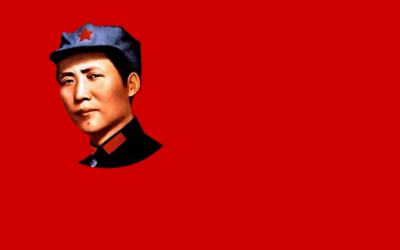
A religious studies scholar in one of Hong Kong’s main universities, who asked us not to disclose his name for easily understandable reasons, told Bitter Winter that the only reason for falsely arguing that some or even most members of the True Buddha School are at the same time Falun Gong practitioners is to make sure that a future crackdown on Falun Gong in Hong Kong is followed by the eradication of the True Buddha School. “It is not a new strategy for the CCP, he said. In the 1950s Chairman Mao launched a great campaign against a large religious movement called Yiguandao. While he was at it, he arrested thousands of devotees of other religious groups who had nothing to do with Yiguandao, but the police claimed they were also Yiguandao members. Perhaps it will be not only the True Buddha School whose followers will be labeled in Hong Kong as Falun Gong practitioners in disguise.”

Uses a pseudonym for security reasons.