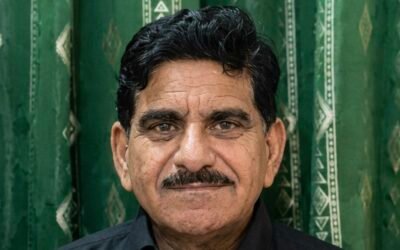
More than one million visit the Hindu shrine every year. Yet the central government “would not spend a penny” for needed work there, Senator says.
by Massimo Introvigne

Baluchistan senator Danesh Kumar criticized the central government of Pakistan in a press conference this week for consistently refusing to allocate money for providing needed facilities to Hindu devotees who visit Hinglaj Mata Mandir. Senator Kumar, who is a member of the Baluchistan Awami Party (BAP), said that the Baluchistan provincial government has provided Rs 1 billion for works in the temple and the surrounding area but this is not enough without the support of the central authorities, who oppose a deaf ear to the requests.
Kumar insisted that the lack of cooperation by the central government is based on ideological rather than economic reasons, since the high number of pilgrims (more than one million) visiting Hinglaj Mata Mandir every year, coming from several different countries, bring money to Pakistan and help local businesses, including those owned by Muslims. He noted that local Muslims also joined the call for governmental support.

Hinglaj Mata Mandir is located in the Lasbela district in Baluchistan, around a cave in the scenic Hingol National Park, and is one of the main shrines in the Shakti tradition of Hinduism.

It is connected with the tradition that Sati, consort of Shiva, immolated herself and died, but her body would not burn. Shiva wandered mourning Sati and carried her corpse, until Vishnu dismembered her body in 108 parts. Some fell on other planets, and 52 fell on earth, on the locations of the 52 Shakti Peethas, each dedicated to a form of the goddess. The Hinglaj Mata Mandir is one of the 52 Shakti Peethas, and the place where according to the tradition Sati’s head fell. It is believed that Rama himself made a pilgrimage to the Mandir.
Local Sufi Muslims have integrated the Hinglaj Mata Mandir and its pilgrimage in their spiritual path, following the example of the 18th-century sage Shah Abdul Latif Bhittai, one of the greatest Sufi poets of the Indian subcontinent. It is claimed that the goddess appeared to the poet, thanking him for his participation in the pilgrimage. Some Muslims still participate in the pilgrimage today.

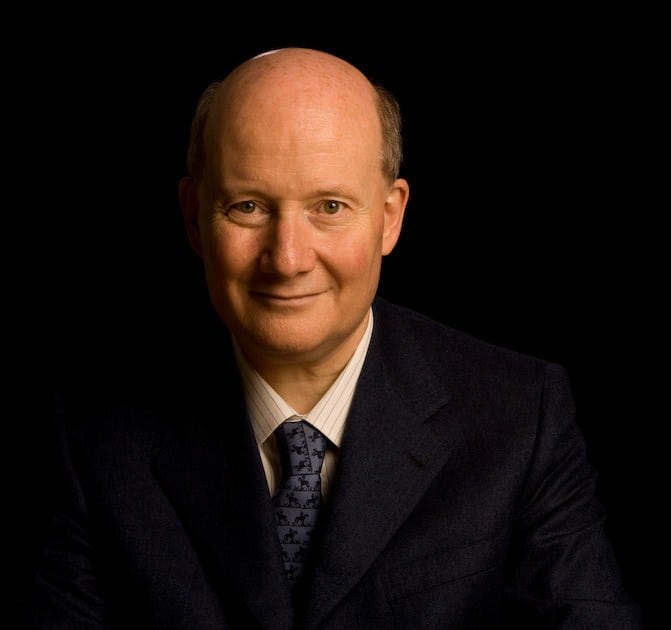
Massimo Introvigne (born June 14, 1955 in Rome) is an Italian sociologist of religions. He is the founder and managing director of the Center for Studies on New Religions (CESNUR), an international network of scholars who study new religious movements. Introvigne is the author of some 70 books and more than 100 articles in the field of sociology of religion. He was the main author of the Enciclopedia delle religioni in Italia (Encyclopedia of Religions in Italy). He is a member of the editorial board for the Interdisciplinary Journal of Research on Religion and of the executive board of University of Pennsylvania Press’ Nova Religio. From January 5 to December 31, 2011, he has served as the “Representative on combating racism, xenophobia and discrimination, with a special focus on discrimination against Christians and members of other religions” of the Organization for Security and Co-operation in Europe (OSCE). From 2012 to 2015 he served as chairperson of the Observatory of Religious Liberty, instituted by the Italian Ministry of Foreign Affairs in order to monitor problems of religious liberty on a worldwide scale.