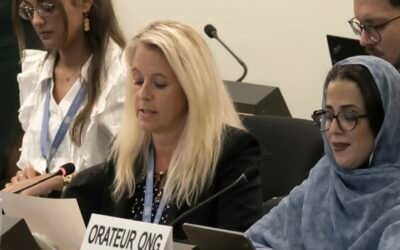
As the Court itself stated, the decision also protects controversial religious organizations.
by Massimo Introvigne

As the Supreme Court itself stated in its majority opinion, its July 1 decision in American Prosperity Foundation v. Bonta, Attorney General of California may also protect religious organizations that are controversial or unpopular, and their donors.
The case was promoted by American for Prosperity Foundation (APF), founded by the billionaire Koch brothers and regarded as one of the largest right-wing political advocacy groups in the United States, and by the Thomas More Law Center, a Christian conservative public interest law firm. They sued the State of California’s Attorney General Xavier Becerra, who now serves as Secretary of Health and Human Services in the Biden administration, after he enforced a requirement that charities and nonprofits operating in California should provide the Attorney General with the names of individuals and companies that in a given year donated more than $5,000 or, in some cases, more than 2% of the total income of the charity. Based on the legal history of the proceedings, the Supreme Court regarded as a proved fact that “California was unable to ensure the confidentiality of the donors’ information,” and the name of donors to controversial organizations repeatedly appeared in the media.
APF and the Thomas More Law Center claimed that California violated their First Amendment rights to free association by deterring individuals from financially supporting them. There is little doubt the two organizations are unpopular with segments of the population, in California probably with the majority, given the state’s consistent electoral results. Thomas More opposes same-sex marriage and abortion, and APF promotes conservative tax and health policies and opposes smoking bans and several pro-ecology measures.
This, the Supreme Court said, is precisely the point. Popular organizations are protected by their own popularity. Those who donate to unpopular organizations may be deterred from doing so if they know that their names may become public, and they may be socially ostracized or see their businesses boycotted. The court offered unpopular religious organizations as examples of those groups that are vilified in the media and may suffer from donor disclosure policies.
Today, in addition to groups labeled as “cults,” the most controversial organizations are those on the extreme right-wing end of the political spectrum. The Supreme Court said that, as long as they are not illegal, they are protected by the First Amendment, and this protection includes keeping the names of their donors confidential.
Predictably, and because of this reason, the Supreme Court split on ideological lines. Justice Sonia Sotomayor wrote a dissenting opinion supported by fellow liberal Justices Breyer and Kagan. Interestingly, Sotomayor noted that decades ago, provisions protecting the confidentiality of the members and donors of charities were needed in the South to shield civil rights organizations from racist reprisals. She believes the situation is better now, but she admits that donors to APF and Thomas More may “reasonably fear reprisals” in contemporary California. She would however have favored an order protecting the two organizations individually rather than a wider ruling striking down the whole California donor disclosure requirements.
The majority of the Supreme Court, however, argued that in cases of frauds or other criminal wrongdoings by charities, courts already have the power to summon lists of donors, and a general provision damaging “over 100,000 charities currently registered in the state [of California]” is not needed.
Those who want to donate (my examples, not the Supreme Court’s) to the Church of Satan, to a group advocating teaching of Flat Earth theories in schools, or to a religious group whose leader is in jail for sexual abuse maintain their right to have their identity as donors not disclosed to the media.
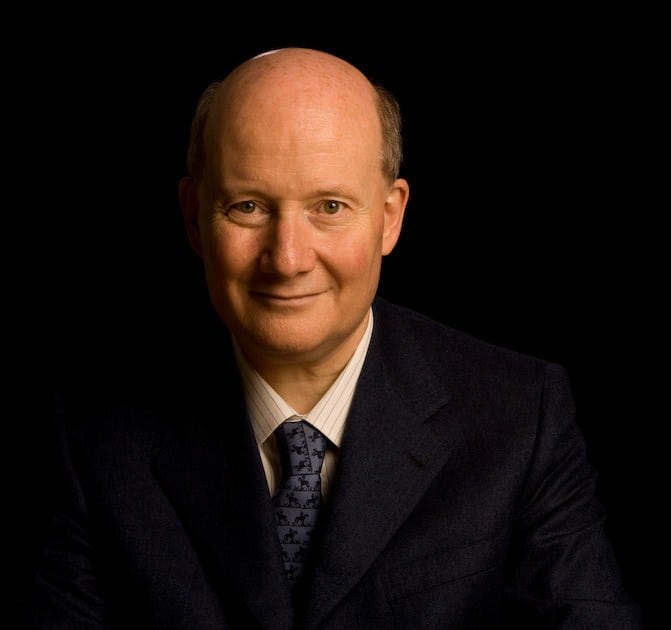
Massimo Introvigne (born June 14, 1955 in Rome) is an Italian sociologist of religions. He is the founder and managing director of the Center for Studies on New Religions (CESNUR), an international network of scholars who study new religious movements. Introvigne is the author of some 70 books and more than 100 articles in the field of sociology of religion. He was the main author of the Enciclopedia delle religioni in Italia (Encyclopedia of Religions in Italy). He is a member of the editorial board for the Interdisciplinary Journal of Research on Religion and of the executive board of University of Pennsylvania Press’ Nova Religio. From January 5 to December 31, 2011, he has served as the “Representative on combating racism, xenophobia and discrimination, with a special focus on discrimination against Christians and members of other religions” of the Organization for Security and Co-operation in Europe (OSCE). From 2012 to 2015 he served as chairperson of the Observatory of Religious Liberty, instituted by the Italian Ministry of Foreign Affairs in order to monitor problems of religious liberty on a worldwide scale.