A mob demolished the minarets and mihrab of the building in Muzaffargarh. Again, the police sided with the thugs.
by Massimo Introvigne

Despite international protests, attacks against Ahmadi mosques in Pakistan continue unabated.
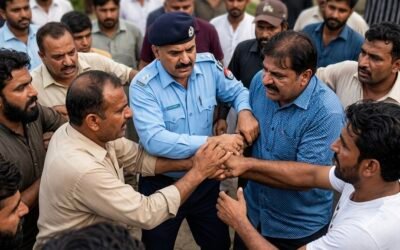
On April 11, a crowd gathered around the Ahmadi mosque in a village in the area of Muzaffargarh, in Punjab, and started demolishing the minarets and mihrab.

Local Ahmadis called the police, which sided with the attackers, and actually arrested five members of the minority religions.
The incident proved, once again, that the Supreme Court 2014 directives for the protection of places of worship of minority religions are not respected in Pakistan.
The Ahmadis are regarded as “heretics,” and officially declared non-Muslim by Pakistani law. Referring to their places of worships as “mosques” is prohibited.

Apart from any theological dispute, Pakistan should guarantee the freedom of religion or belief to all its citizens, and protect them from harassment coming from violent mobs and militias. When it comes to the Ahmadis, this almost never happens, and hundreds of them have been killed, with perpetrators rarely punished.
Hindu, Sikh, and Christian minorities are also subject to various forms of discrimination and persecution in the country.
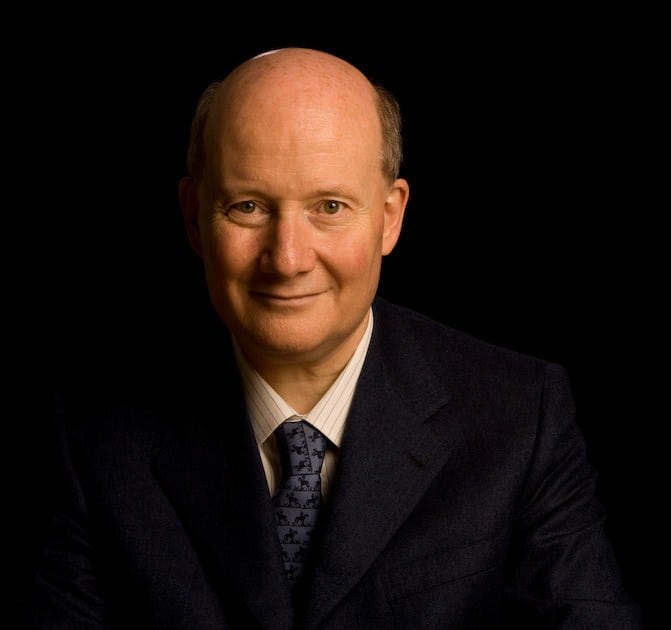
Massimo Introvigne (born June 14, 1955 in Rome) is an Italian sociologist of religions. He is the founder and managing director of the Center for Studies on New Religions (CESNUR), an international network of scholars who study new religious movements. Introvigne is the author of some 70 books and more than 100 articles in the field of sociology of religion. He was the main author of the Enciclopedia delle religioni in Italia (Encyclopedia of Religions in Italy). He is a member of the editorial board for the Interdisciplinary Journal of Research on Religion and of the executive board of University of Pennsylvania Press’ Nova Religio. From January 5 to December 31, 2011, he has served as the “Representative on combating racism, xenophobia and discrimination, with a special focus on discrimination against Christians and members of other religions” of the Organization for Security and Co-operation in Europe (OSCE). From 2012 to 2015 he served as chairperson of the Observatory of Religious Liberty, instituted by the Italian Ministry of Foreign Affairs in order to monitor problems of religious liberty on a worldwide scale.