Authorities across China adopt strict measures barring Party members from having any affiliation with religion and traditional Chinese spiritual practices.
by Hu Ke
In May last year, CCP members in Anshan, a prefecture-level city in the northeastern province of Liaoning, received “ten prohibitions on religious beliefs.” They not only bar Party members from holding religious beliefs but also provide strict guidelines for their daily lives. For example, they are prohibited from wearing or displaying anything with religious symbols at home and work or entering places of worship for non-work purposes, even during their work-related trips and holidays or visiting historic or scenic sites. Meetings with religious personnel without permission are also banned.
The persecution of religious CCP members across the country intensified after the Party authorities incorporated bans on practicing faith into the newly revised Disciplinary Regulations of the Chinese Communist Party in August 2018.
“These rigorous regulations demand CCP members to make a clean break with religions and keep pure ideologies,” a government insider explained.
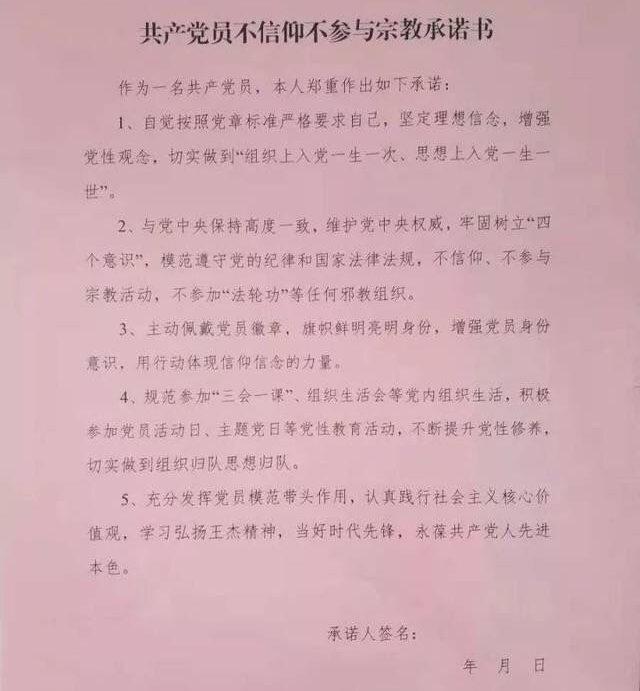
Restrictions for Party members in the Tibet Autonomous Region are even more stringent. The Organization Department (human resources division of the CCP) of Chamdo, the region’s third largest city, issued “sixteen restrictions” also last May. According to them, Party members are forbidden from holding religious beliefs and attending religious activities. They are also banned from “having private discussions and willfully spreading personal views” on ethnic and religious policies and related issues. Sharing “sensitive remarks” about religious beliefs on social media is not allowed as well.

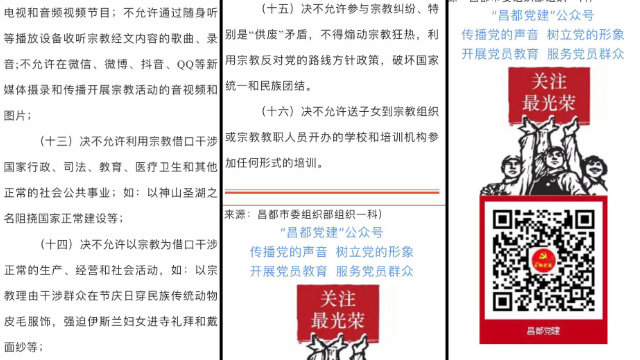
The “sixteen restrictions” issued by Chamdo city’s Organization Department.
Party members cannot “swear off gambling, smoking, drinking, killing, and eating meat and fish in the name of deities or Buddha.” They will be punished for opposing the government’s plans to build public facilities on sacred and holy Buddhist mountains, lakes, and other areas. The CCP defines such acts as “using religion as a pretext to interfere in public social undertakings.”
CCP members are also obliged to report to the government about any relatives who are clergy members living abroad to whom they send money.

These restrictions are widely used to punish CCP members or their families for holding religious beliefs and practicing their faith. Even for something that happened years ago.
In October last year, a Party member in one of Liaoning’s villages was punished repeatedly for her faith. Officials from the town government that administers the village not only demanded her to write a self-criticism statement and tore down religious images in her home but also threatened to close the state-run church to which she belonged. They also obtained the list of people of faith in the village and removed religious symbols in their homes.
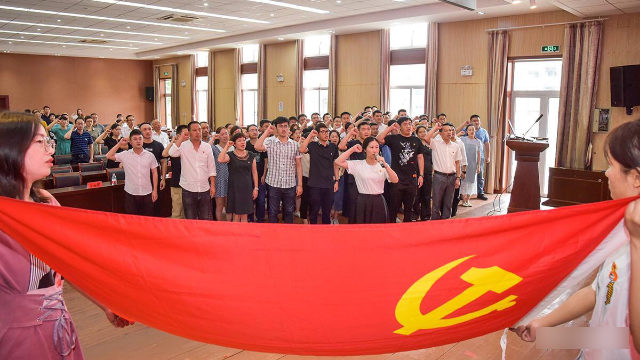
The same month, a CCP member from Liaocheng city in the eastern province of Shandong was reported to authorities for practicing feng shui—a traditional Chinese spiritual practice that uses energy forces to harmonize individuals with their surrounding environment—four years ago. The Party committee in his workplace investigated and demoted him.
A Party member from Liaocheng complained to Bitter Winter that the situation had changed dramatically: feng shui practices have never attracted the government’s attention before, but their persecution now is “a matter of principle.” “From now on, any casual remark or action can be punished,” the man added.

According to a CCP member from Kaifeng city in the central province of Henan, six officials in his village were demanded to write self-criticism statements last September because they had been discovered donating money to build a temple. Another Party member had to write a similar statement because his son is Buddhist and had Buddhist flags in his home.

Uses a pseudonym for security reasons.